You are also feeding the germs (bacteria) in your mouth that can cause decay and gum disease. Plaque is a thin, invisible, sticky film of bacteria and other material that covers every surface of every tooth. When sugars or starches in your mouth come into contact with plaque, acids form. Those acids can attack your teeth for 20 minutes or more after you finish eating. Repeated attacks can break down the hard enamel on the surface of your teeth, which leads to tooth decay. The bacteria in plaque also trigger an inflammatory response, breaking down the gums, bone and other structures that support your teeth.
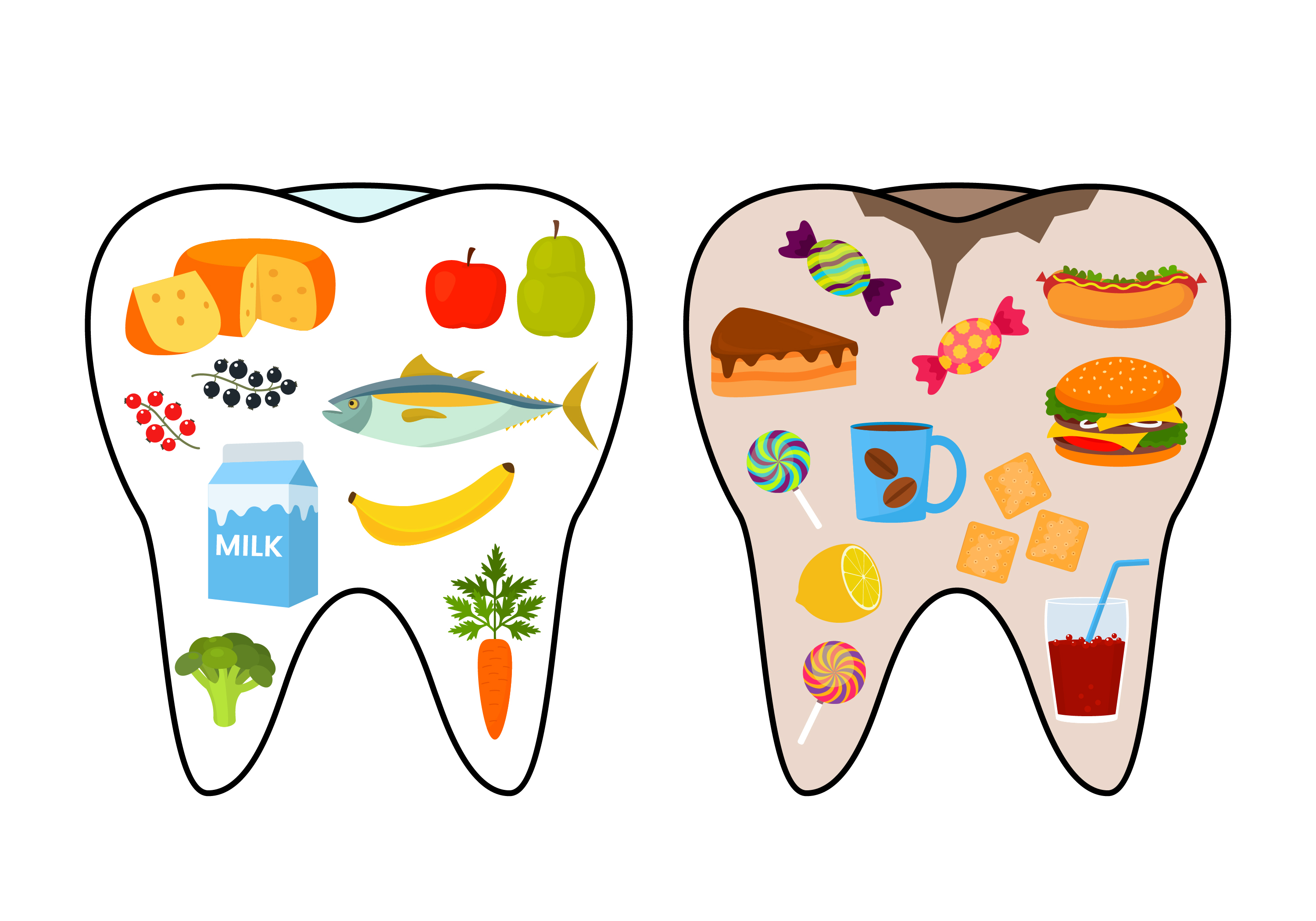
Some foods invite tooth decay. Others help fight plaque build-up. Here are some to look for and some to stay away from.
The good guys
1. Fibre-rich fruit and vegetables
Foods with fibre help keep teeth and gums clean, says the American Dental Association (ADA). They also get saliva flowing. Alongside good dental care at home, that is your best natural defence against decay and gum disease. Roughly 20 minutes after eating something with sugars or starches, saliva starts to reduce the effect of the acids and enzymes attacking your teeth. Saliva contains traces of calcium and phosphate, so it also restores minerals to areas of the teeth that have lost them to bacterial acids.
2. Cheese, milk, plain yoghurt and other dairy
Cheese is another saliva-maker. The calcium and phosphates in milk, cheese and other dairy products help replace minerals your teeth may have lost to other foods. They also help rebuild tooth enamel.
3. Green and black tea
These teas contain polyphenols that interact with plaque bacteria. These substances kill the bacteria or hold them in check, which stops them growing or producing the acid that attacks teeth. Depending on the water you use to brew it, a cup of tea can also be a source of fluoride.
4. Sugar-free chewing gum
Another great saliva-maker that clears food particles from the mouth.
5. Foods with fluoride
Fluoridated drinking water, or anything you make with it, helps your teeth. That includes powdered juices (as long as they are not loaded with sugar) and dehydrated soups. Commercially prepared foods such as poultry products, seafood and powdered cereals can also provide fluoride.
The bad guys
1. Sticky sweets and candy
If you eat sweets, go for the ones that clear your mouth quickly. So skip lollipops, hard candy and cough sweets made with refined sugar. Chocolate’s effect on preventing decay has been widely promoted (largely by studies funded by the confectionery industry) and has not been fully proven. But the ADA notes that chocolate washes off teeth faster than other sweets. Dark chocolate (70% cocoa) has some health benefits, and some studies suggest chocolate is not as bad as other sugary treats.
When you eat and drink starchy or sugary foods, you are not only feeding yourself. You are also feeding the germs (bacteria) in your mouth that can cause decay and gum disease.
2. Starchy foods that get stuck in your mouth
Soft breads and crisps, for example, can get trapped between your teeth.
3. Fizzy drinks
These drinks are the main source of added sugar among children and teenagers. They are loaded with sugar, and most of them contain phosphoric and citric acids that wear away tooth enamel.
4. Anything that dries out your mouth
That includes alcohol and many medicines. If medication is the cause, talk to your dental care provider about a fluoride rinse or a fluoride gel to brush with.