How your teeth fit together
When we talk about your bite, we mean the way your upper and lower jaws come together. Your upper teeth should sit slightly over your lower teeth, and the points of your molars should fit into the grooves of the opposing molar. If your jaw lines up like that, you most likely have a healthy bite.
A healthy bite improves how your teeth function and keeps them balanced. If your bite is misaligned, it can put uneven pressure on certain teeth, wearing them down unevenly.
Your bite also matters for a range of things: chewing, swallowing, breathing, facial symmetry, digestion and more.
3 signs of a good bite
- No pain: You should not feel any pain in your bite. Pain in your jaw or the muscles around it can point to a misaligned bite.
- Teeth: If your teeth line up with each other and sit symmetrically along the upper and lower jaw line, that is a good sign your bite is healthy. Your teeth are designed to balance each other’s force — think of them as gears in a machine. If one gear is off, it causes problems for the whole machine. Biting and chewing put your teeth under strain, and if they are not properly aligned, that force lands on your jaw and teeth instead of on the food you are chewing.
- Tongue: Your tongue can be a great indicator of a bad bite. If your bite is not aligned, there is a good chance your tongue gets nipped or cut at the sides, which can lead to open sores that are more likely to become infected.
What actually counts as a bad bite
If you have ever heard the term malocclusion, it literally means “bad bite” in Latin. There are plenty of signs that point to a bad bite, and we will go through them shortly — but first, let’s look at what can cause one.
Malocclusions can be caused by:
- Heredity
- A difference in size between the upper and lower jaw
- A difference in the size of your teeth
- Missing teeth, extra teeth or impacted teeth
- Birth defects, such as cleft palate
- Misalignment after a jaw injury has healed
- Childhood habits such as thumb-sucking, prolonged dummy use or tongue thrusting
What are the different types of bad bite?
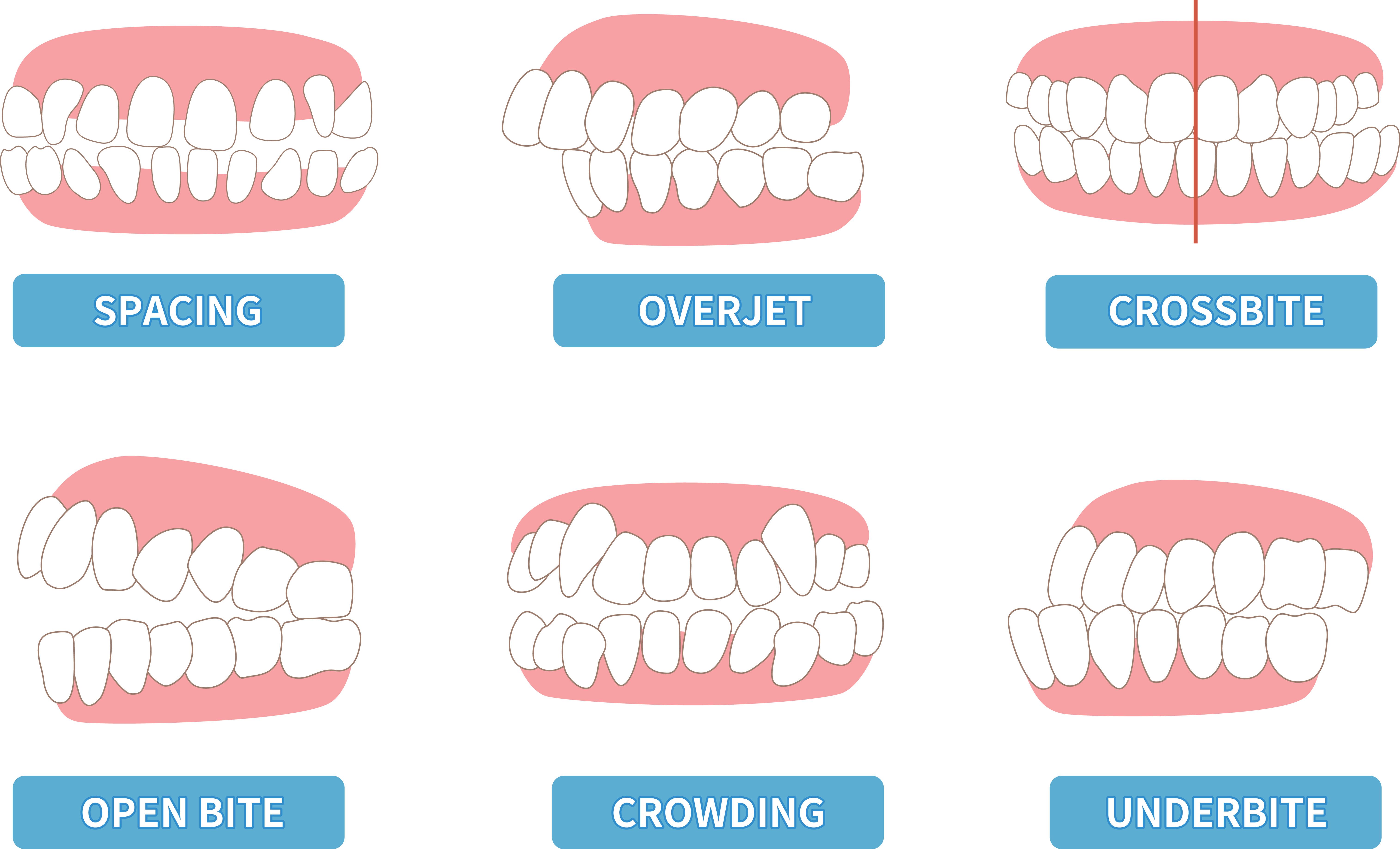
Broadly speaking, there are four types: overbite, underbite, crossbite and open bite.
- Overbite: Some overlap of the lower front teeth is normal, but in some cases an increased overbite can make the front teeth bite into the gums.
- Crossbite: This is where the upper teeth sit inside the lower teeth. It can happen on one side of the jaw or both.
- Underbite: This is where the lower jaw sits out in front of the upper teeth.
- Open bite: An open bite is when the front teeth do not overlap the lower teeth at all, and the back molars do not touch, so the mouth is never in a resting position.
What are the signs that you have a bad bite?
For some people it is obvious; for others the signs are less noticeable. Some of the giveaways include:
TMJ symptoms
The temporomandibular joint sits on each side of the face and connects the lower jaw to the skull. It plays a major role in giving your jaw the range it needs — think talking, yawning and, most importantly, chewing.
TMJ symptoms include pain when moving the jaw, stiffness, soreness and clicking when you open and close your mouth.
Headaches
Headaches may not seem like an obvious sign of a misaligned bite, since they can be caused by all sorts of things, but they are a symptom.
When your bite is misaligned, the muscles that move your jaw are often very tight and tense. That built-up tension can cause headaches ranging from mild to severe.
Speech problems
Not everyone will have this symptom, but for some people it is very real. Worth noting: for most patients, once the jaw is corrected with orthodontic treatment, the speech difficulty eases.
If you struggle to pronounce or enunciate certain words because of jaw stiffness, that is a good indicator of a misaligned bite.
Teeth grinding
Grinding your teeth is a serious problem that can have bad consequences for your smile. It can also lead to jaw pain and headaches.
The technical name for teeth grinding is bruxism, and it is more likely to happen to people whose bite simply does not fit together well. The strain a misalignment puts on the jaw makes grinding more likely.
Your dentist notices
This is the last of the giveaways: your dentist will spot during a check-up if something is not right. A trained eye can pick up teeth that do not fit together well, even when your smile looks fine.
Your dentist can also tell you whether your teeth are wearing unevenly, which happens with a misaligned bite. Once the bite is corrected, it becomes balanced and the uneven wear is corrected too.
How do you fix a bad bite?
Aligning the jaw can only be done with orthodontic treatment. Broadly speaking, fixing a misaligned bite is complex work, so clear aligners like Invisalign are not really ideal. Braces are the better bet when it comes to applying enough pressure to the teeth to realign the jaw, usually with the help of elastics.
But the surest way to know whether you have a bad bite is to see an orthodontist. Orthodontists are the only specialists who can align the teeth, jaw, mouth and face.
If you think your bite might be off after reading this article, book your free consultation and have your jaw assessed.
Signs and symptoms
You may have occlusal disease, or a “bad bite”, if you have one or more of the following signs and symptoms:
- Worn, chipped, cracked or broken teeth
- Teeth that are sensitive to heat, cold and/or biting
- Multiple root canals
- Loose or mobile teeth
- Clenching or grinding your teeth
- Abfractions — wedge-shaped notches in the teeth at the gum line — or receding gums
- Severe localised bone loss around the teeth
- Pain in the teeth and/or TMJ when chewing
- Headaches and facial muscle pain
- Teeth or dental work that fractures or breaks